
A lot of conversations about artificial intelligence have hovered between excitement and anxiety. Depending on who you ask, AI is either the biggest productivity unlock of our time… or the thing that will make half our roles obsolete.
But for leaders, especially in small and medium-sized businesses, AI is neither a threat nor a magic wand. It’s a collaborator.
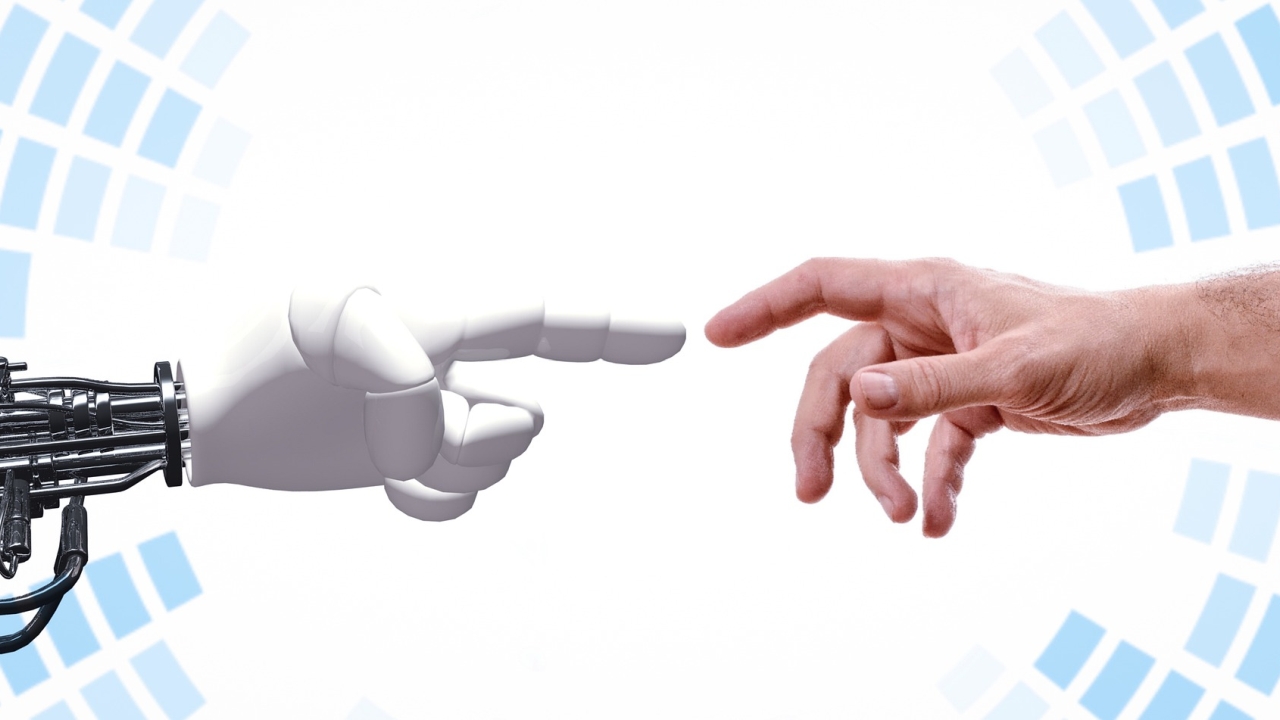
This is where the concept of Parallel Intelligence comes in: the ability for humans and AI to work alongside each other, augmenting decision-making, creativity and execution. Rather than replacing human leadership, AI enhances it—if leaders are intentional about how they adopt it. The term Parallel Intelligence isn’t new; it was first proposed by Chinese Professor Fei-Yue Wang, back in 2016 after a computer beat a human in a game of ‘Go’ (https://phys.org/news/2016-12-parallel-intelligence-intelligent-future.html). At the time Wang stated:
“[The Human] was not defeated by a computer program, but by all the humans standing behind the program, combined with the significant cyber-physical information inside it,” …… “This also verifies the belief of many AI experts that intelligence must emerge from the process of computing and interacting.”
Research from organisations like DDI and Gartner reinforces the same message: the leaders who thrive won’t be the ones who know the most about AI technology, but the ones who know how to interact and lead with it.
AI Is Evolving Faster Than Leadership Models
Gartner has been particularly vocal about the next frontier of AI challenges:
Agentic AI , a generation of AI models that can autonomously execute tasks, make decisions within defined boundaries, trigger workflows, and collaborate with other systems.
This shift towards Agentic AI is happening for several reasons:
- Businesses need more than insights, they need execution. Earlier AI tools helped leaders analyse data or generate ideas. But SMEs today need systems that reduce operational drag, not just provide more dashboards. Agentic AI fills this gap by handling tasks end-to-end: processing orders, drafting documents, triaging support queries, automating follow-ups, and even orchestrating internal workflows. For SMEs with lean teams, this can be transformative.
- Automation is no longer about efficiency; it’s about competitiveness. Larger enterprises already use AI assistants behind the scenes. SMEs are now expected to keep pace with faster customer response times, personalised experiences, and data-driven decision-making. Agentic AI helps level that playing field by giving smaller firms access to automation once reserved for large corporate infrastructures.
- The cost of AI capability has dropped dramatically. Tools that were experimental even two years ago are now accessible via subscriptions or plug-ins. No teams of engineers needed. This democratisation means SMEs are onboarding AI faster, but often without the maturity or guardrails enterprises have in place. That creates new leadership challenges.
AI governance – covering risk, explainability, compliance, and accountability structures to ensure responsible use. Governance isn’t about slowing innovation. It’s about enabling AI to operate safely and reliably in a real business environment. Four major pressures are driving the need for stronger governance in SMEs:
- Increased Autonomy = Increased Risk Exposure – When AI can act independently, even small errors can escalate quickly, from sending incorrect customer messages to misclassifying orders or exposing data. Governance defines who supervises outputs, what exceptions trigger human review, and how decisions are logged.
- Explainability Matters for Trust – If AI takes actions without a clear rationale, trust can be lost, and customers become uncomfortable. SMEs need frameworks that ensure decisions can be explained, audited, and challenged. Explainability becomes a cultural foundation, not just a technical feature.
- Data Privacy and Security Expectations Are Rising – AI tools process sensitive customer information, internal documentation, financial records, and personal data. Without policies on storage, access, retention, and vendor risk, SMEs open themselves to legal and reputational harm.
- Regulatory Momentum Is Building – The EU AI Act and similar frameworks globally are pushing organisations to demonstrate responsible AI usage. Even if an SME isn’t directly regulated, its customers or partners may be meaning governance becomes a requirement for doing business.
For SME leaders, this presents a double challenge:
- AI capabilities are growing exponentially.
Tools once accessible only to enterprises, automated customer support, intelligent analytics, and workflow orchestration, are now affordable to any small business. - Leadership readiness is not growing at the same speed.
Many leaders still see AI as a “technical initiative” rather than a cultural and organisational shift.
To close that gap, leaders must build their capability for Parallel Intelligence: knowing when to rely on AI, when to rely on people, and how to design systems where both can thrive.
Skills Leaders Need to Develop Now
Generative AI Fluency for Leaders and Teams
You don’t need to be a data scientist. But you do need to understand:
- What generative AI can and cannot do
- How it fits into your business processes
- How to prompt, supervise, and evaluate its output
Teams need the same literacy. When everyone can use AI tools confidently, adoption stops being a technical problem and becomes a cultural strength.
Ethical Guardrails: Trust Is the Real Differentiator
Consumers and employees are increasingly aware of the risks behind AI, particularly around data privacy, bias, and opacity.
Leaders must create clear guidelines around:
- Explainability – How decisions made or influenced by AI are understood by humans
- Data Privacy – Ensuring tools have appropriate controls and meet regulatory standards
- Risk Review – Clear accountability for outcomes
Gartner emphasises this governance challenge repeatedly, as do consultancies such as Aura, a Bain and Company spin-off providing AI-guided Workforce Management tools. Their thoughts on guidance on safe AI implementation can be found here: (https://blog.getaura.ai/workforce-trends-in-2025#:~:text=AI%20Revolutionizing%20Hiring%20Across%20Industriesi).
In SMEs, ethical leadership becomes a competitive advantage. It builds trust. And trust accelerates adoption.
From Job Loss to Job Evolution
Most roles won’t disappear—but they will transform.
Examples already emerging in small organisations:
- AI-Augmented Customer Support
Chatbots handle tier-one queries; humans focus on complex cases and empathy-driven interactions. - AI-Powered Analytics for Decision-Making
Instead of digging through dashboards, leaders receive insights and scenario modelling instantly. - Marketing & Content Creation
Teams use AI to draft, ideate, personalise, and optimise, freeing humans for strategy and storytelling.
These shifts aren’t theoretical. They’re happening every day, and the SMEs embracing them are gaining measurable productivity benefits.
Case Studies: SMEs Seeing Real Results
While big enterprises dominate AI headlines, some of the most creative implementations come from smaller firms:
- Retail SMEs using AI agents to automate inventory forecasting (https://tezeract.ai/ai-case-studies/stocksenseai-ai-powered-inventory-management)
- Hospitality SMEs using AI to personalise guest communication (https://www.capellasolutions.com/blog/improving-customer-service-with-ai-chatbots-a-case-study-from-the-hospitality-industry)
- Professional services firms using AI to streamline proposals, analysis, and documentation (https://www.businessinsider.com/mckinsey-bcg-and-deloitte-competition-small-boutique-specialized-ai-2025-4)
- Startups using generative AI to speed up prototyping and product iteration (https://arxiv.org/abs/2507.21012)
The pattern is clear: AI doesn’t replace your people, it amplifies their impact.
So What Should Leaders Do Now?
Here are practical steps to start building Parallel Intelligence capability:
- Run an AI Readiness Review
Map processes, data maturity, and areas where augmentation, not full automation, would create value. - Start Small and Scale Intentionally
Pilot one AI-enabled workflow to test adoption, trust, and governance. - Upskill Continuously
Give teams access to training, experimentation time, and psychological safety to try AI tools. - Create an AI Governance Framework
Align AI use with your values, ethics, and organisational culture. - Lead by Example
The most influential thing a leader can do is use AI themselves and talk openly about how and why.
The Future of Leadership Is Collaborative
The rise of AI doesn’t diminish the role of human leadership. It elevates it.
As technology becomes more capable, human leadership must become more curious, empathetic, experimental, and strategic. The leaders who thrive won’t be the ones who fear AI, but the ones who treat it as a partner.
This is the heart of Parallel Intelligence:
Humans and AI, working together, to build something greater than either could alone.
If SMEs can get this right, they won’t just adopt AI, they’ll transform because of it.



Add comment